Convergence and Opportunities: EU–China Sustainable Finance Development
The COP30 United Nations Climate Change Conference took place against a challenging geopolitical backdrop. Held last November in Belém, Brazil, it saw the United States withdrawing from the Paris Agreement for a second time and renewing its support for fossil fuels, increasing pressure on other major economies to uphold global climate ambitions. In this context, the European Union and China have emerged as pivotal actors. Neither can lead the global climate agenda alone; however, together they can stabilise expectations, reinforce multilateralism, and sustain progress in an increasingly fragmented international system.
Climate change remains a relatively ‘low-politics’ policy area, where shared interests can still outweigh geopolitical differences. Last year marked the 50th anniversary of diplomatic relations between the EU and China. During high-level meetings in Beijing, top leaders reaffirmed the importance of the EU–China bilateral relationship, with discussions covering trade, competitiveness, and global challenges, particularly climate change. The President of the European Commission praised the strong track record of EU–China cooperation on climate issues, and both sides issued a joint statement marking the tenth anniversary of the Paris Agreement. They committed to demonstrating leadership in driving a global just transition, in line with sustainable development and poverty eradication goals.
In 2026, EU–China climate cooperation has unfolded within a more rules-based and economically consequential frame as the EU enters the first year in which the Carbon Border Adjustment Mechanism (CBAM) moves beyond its transitional reporting phase to impose financial obligations. At the same time, tensions in the electric vehicle sector have evolved into pragmatic engagement: following tariffs imposed in October 2024 on China-made battery electric vehicles, the European Commission has issued guidance in 2026 allowing Chinese producers to propose minimum price undertakings – potentially replacing duties and signalling a shift from confrontation towards managed competition, including commitments on future investment in the EU. In parallel, cooperation in renewables and sustainable finance has continued through technical exchanges, taxonomy alignment, and green capital mobilisation, underscoring that climate objectives remain one of the few areas where strategic rivalry and collaboration coexist.
China’s Green Finance Framework and Policy Convergence with the EU
China’s 15th Five-Year Plan (2026–2030) places green finance as one of the key areas for economic and financial transformation. Highlighted priorities include improving the inclusiveness and adaptability of capital market institutions, strengthening coordination between investment and financing functions, and implementing a comprehensive policy framework that covers fiscal measures, finance, investment, pricing mechanisms, technology, and environmental regulation to support green and low-carbon development.
Sustainable finance in China has accelerated significantly since the country pledged to peak carbon emissions by 2030 and achieve carbon neutrality by 2060. Despite ongoing geopolitical and trade uncertainties, Chinese financial regulators – the People’s Bank of China (PBOC), the National Financial Regulatory Administration (NFRA), and the China Securities Regulatory Commission (CSRC) – jointly issued the Green Finance Endorsed Project Catalogue (‘the 2025 Catalogue’). Effective as of 1 October, 2025, the Catalogue establishes a unified standard for all green financial products, including green credit and green bonds, significantly strengthening the coherence of China’s green finance system.
The 2025 Catalogue represents a historic milestone. For the first time, China has unified standards across different green financial instruments, greatly enhancing interoperability. For example, enabling green loans to be securitised and transformed into green bonds, thereby improving market liquidity. It also marks the first full alignment of green loan statistical standards between the PBOC and the NFRA, enhancing regulatory efficiency and consistency.
Notably, the updated Catalogue expands beyond traditional production-side sectors such as renewable energy and environmental equipment manufacturing. It introduces green trade and green consumption as new categories, enabling full lifecycle coverage from production and circulation to consumption. This reflects the growing importance of supply-chain decarbonisation and sustainable consumption under global ESG governance trends, and further supports alignment and mutual recognition between China’s green finance standards and international frameworks, including those in the EU.
Hydrogen with Sustainable Finance Support: An Example Strategic Area of Competition and Cooperation
The 2025 Catalogue also significantly strengthens the role of hydrogen. As a key vector for deep decarbonisation and an essential industrial feedstock, hydrogen is incorporated across the full value chain. This includes equipment manufacturing for hydrogen production, storage, transport, and application, as well as infrastructure projects such as green hydrogen-to-methanol facilities and hydrogen pipelines. Hydrogen-related equipment trade is also classified as a core component of green trade, highlighting the need for dedicated financial support.
This focus on hydrogen closely aligns with EU priorities. Under the 2022 REPowerEU Strategy, the EU aims to produce 10 million tonnes of renewable hydrogen and import an additional 10 million tonnes by 2030. By 2050, renewable hydrogen is expected to cover around 10% of the EU’s energy demand, playing a critical role in decarbonising energy-intensive industries and transport. In this domain, China and the EU exhibit a relationship characterised by both competition and cooperation, with each leveraging policy frameworks and green finance instruments to accelerate sectoral development.
Competition is particularly evident across several dimensions. On the technology side, firms are competing to scale up electrolyser manufacturing (for example, alkaline vs. PEM technologies), improve efficiency, and reduce costs. On the market side, both China and the EU are seeking to secure early-mover advantages in global hydrogen supply chains, including project development, export markets, and standard-setting. In addition, competition extends to industrial policy and subsidies, where public financing and incentives are deployed to attract investment, build domestic value chains, and capture future market share in hydrogen-related equipment and services.
At the same time, there are emerging examples of cross-border cooperation. One notable case is the green hydrogen project being developed by Envision Energy in Spain, which aims to integrate renewable energy generation with hydrogen production for industrial use and potential export. This project reflects how Chinese technology providers and European markets can complement each other: combining cost-competitive equipment manufacturing with strong policy support, infrastructure, and market demand in the EU.
Ultimately, these developments illustrate that sustainable finance taxonomies and related policy frameworks are not ends in themselves, but instruments designed to channel capital toward the real economy. By defining, standardising, and incentivising green activities, they help scale up critical technologies and infrastructure.
Deepening Market Alignment through Common Taxonomies
In November 2024, the International Platform on Sustainable Finance (IPSF) released the 2024 edition of the EU–China Common Ground Taxonomy (CGT). By 31 October, 2025, expert analysis by the Green Finance Committee of the China Society for Finance and Banking found that 490 green bonds issued in China’s interbank market were aligned with the CGT, of which 288 remained outstanding. These represented 25.6% of all outstanding green bonds by number and 17.2% by value. This demonstrates that the CGT is already playing an important practical role in the market. By collaborating on a common classification framework, it helps bridge EU and China standards, making it easier for investors to identify comparable green assets and supporting cross-boarder investment.
The majority of issuances carried high credit quality, with 93% being rated AAA. Proceeds were primarily allocated to wind power generation (25.5%), urban and rural public transport systems (22.8%), and hydropower generation (20.0%). This demonstrates tangible progress in aligning Chinese and EU sustainable finance standards and facilitating cross-border investor participation.
Scale and Maturity of China’s Green Finance Market
China now hosts the world’s largest green credit market. According to the PBOC, outstanding green loans reached 40.61 trillion RMB by the end of the first quarter of 2025, representing a year-to-date increase of 9.6%. Key areas include green infrastructure upgrades, low-carbon energy transition, and ecological protection and restoration.
China’s green bond market, launched in 2016, has also grown rapidly to become one of the largest globally. A China Bond White Paper reported that between 2016 and 2024, annual issuance increased from 201.8 billion RMB to 683.3 billion RMB, with an average annual growth rate of 16.5%. By the end of 2024, outstanding labelled green bonds totalled 2.2 trillion RMB. When including unlabelled bonds with green use of proceeds, the broader ‘green-oriented’ bond market exceeded 6 trillion RMB.
This signals strong potential to further deepen EU–China cooperation in sustainable finance, including continued efforts on taxonomy alignment, interoperability of standards, and mutual recognition of green financial instruments. It would not only help facilitate cross-border capital flows towards the green economy but also enhance market transparency and credibility, contributing to the efficient financing of low-carbon transitions in both economies and beyond.
Looking Ahead: EU–China Collaboration Opportunities
Looking forward, China and the EU have substantial scope to deepen cooperation in sustainable finance across multiple areas. This includes encouraging a greater allocation of green finance toward biodiversity conservation and nature-based solutions, as well as advancing innovative instruments such as carbon-neutral bonds and sustainability-linked bonds, including pilot schemes that allow the use of carbon allowances as collateral or credit enhancement tools. Both sides can further promote the development of green asset management products by diversifying issuance and investment channels, while expanding green inclusive finance instruments tailored to the financing needs of small and medium-sized enterprises.
At the market level, continued opening of China’s green bond market – through greater issuance of green Panda bonds, enhanced cross-border investment, and the development of Belt and Road green project bonds – would support deeper capital market integration. Cooperation can also be strengthened through closer engagement with the EU, international organisations, and professional bodies on green finance standards, disclosure frameworks, and environmental impact reporting. Finally, advancing cross-border trading of green bonds, including offshore trading with onshore settlement, alongside the expansion of internationally aligned green bond indices and low-carbon transition bond databases, would further facilitate global capital mobilisation for climate and environmental objectives.
In a world increasingly defined by fragmentation and uncertainty, EU–China cooperation in sustainable finance stands out as a rare point of strategic alignment:where climate ambition meets financial innovation, and where credible multilateral action still has the power to deliver real-world impact.
The views expressed in this article belong to the author(s) alone and do not necessarily reflect those of European Guanxi.
ABOUT THE AUTHOR
Based in London, Daisy Qing Yang is a climate finance professional specialising in sustainable finance, green policy, and energy transition. With experience spanning multilateral development banks (MDBs), United Nations, investment banking, and asset management, she has worked with organisations including the European Bank for Reconstruction and Development (EBRD), Asian Infrastructure Investment Bank (AIIB) and private finance companies. Daisy holds a Bachelor degree in International Politics from Fudan University and double Master degrees in Public Management from Tsinghua University and University of Geneva. Her academic work focuses on sustainable finance, EU-China relations, and global climate governmence.
This article was edited by Daria Bogolyubova and Stefano Bertoli.
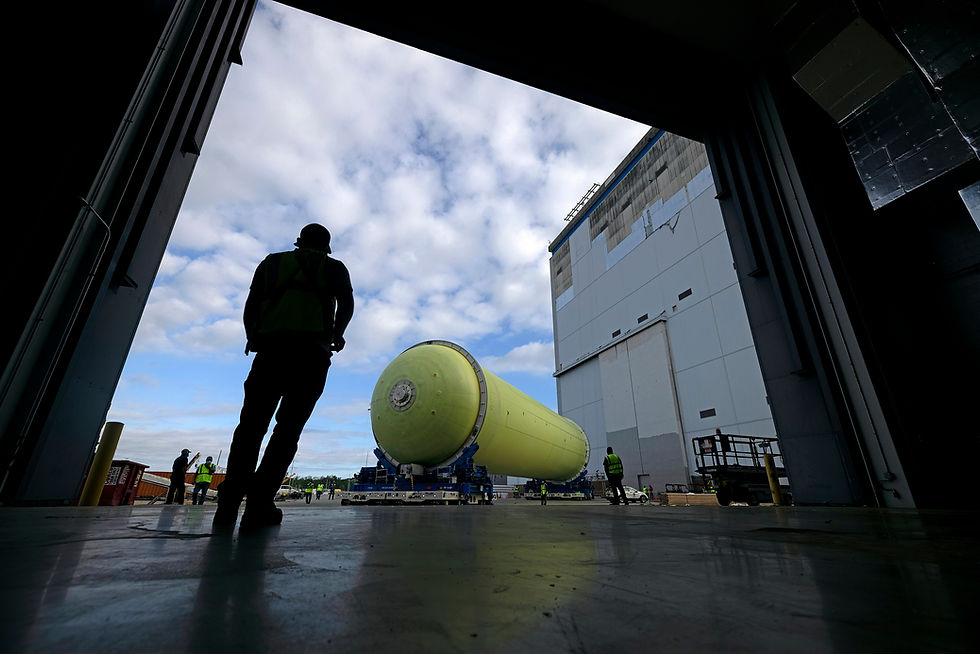
Featured Image: NASA Readies Artemis II Liquid Hydrogen Tank for Next Phase of Manufacturing / Creative Commons Attribution-Share Alike License / Free for use


mình có lần lướt đọc mấy trao đổi trên mạng شيخ روحاني thì thấy nhắc nên cũng tò mò mở ra xem thử cho biết. mình không tìm hiểu sâu chỉ xem qua trong thời gian ngắn để quan sát bố cục cách sắp xếp جلب الحبيب các mục và trình bày nội جلب الحبيب dung tổng thể. cảm giác là các phần được trình bày khá gọn, các hurentest berlin mục rõ ràng Huren Berlin nên đọc lướt cũng không bị rối với mình như vậy là đủ để nắm tin cơ bản rồi. جلب الحبيب
👍
Been using Nano Banana Pro for AI image generation recently. The Pro version handles more complex prompts and delivers sharper results — still powered by Gemini under the hood. Great for concept art and style experiments without any local setup.
It is fascinating to see how sustainable finance is evolving, but sometimes we all need a break from complex policy discussions. If you are looking for a quick, stress-relieving way to unwind between reading reports, I have been spending my downtime playing PolyTrack. It is a fantastic low-poly racing game that requires no downloads and runs directly in your browser. The community-built courses are incredibly creative and provide a perfect mental reset after focusing on intense professional topics like EU-China financial cooperation. Definitely worth a look if you need a short gaming session!
The EU and China stepping up as the stabilizers here is crucial, especially with the US stepping back—but their differing carbon market standards will be the real test of convergence. I've been tracking this closely with a tool that breaks down policy shifts, and it's worth checking out. https://stablevideodiffusion.net
Interesting read — the point about climate being "low-politics" really resonates. It's rare to see any area where the EU and China can still find common ground, but sustainable finance seems to be one of them. Speaking of making things look worse than they are, I actually used a low quality image tool recently to downgrade some charts for a presentation on green bond performance — oddly fitting for how some of these regulatory timelines are progressing. The taxonomy alignment piece is promising, but the real test will be whether they can move past the rhetoric and get the capital flowing.