‘Winning Without Fighting’: Sun Tzu and China’s Contemporary Anti-Access/Area-Denial (A2/AD) Strategy
Over the past two decades, the rapid modernization of the People’s Liberation Army (PLA) has transformed China’s military into a force capable of contesting military access across the Western Pacific. At the center of this transformation lies a sophisticated anti-access/area-denial (A2/AD) architecture. In the literature on strategic studies, A2/AD is commonly understood as a set of capabilities and operational tools intended to prevent, delay, discourage, or complicate an opponent’s military intervention within a contested theatre. The U.S. Department of Defense differentiates between anti-access (A2), which comprises long-range measures aimed at preventing hostile forces from entering an operational area, and area denial (AD), which encompasses shorter-range capabilities designed to restrict an adversary’s freedom of action once access has been achieved. NATO adopts a broadly similar conceptual distinction, interpreting anti-access as the effort to deny entry into a contested region and area denial as the limitation of operational effectiveness within that battlespace.
Although the term A2/AD has become standard within Western strategic studies, it is largely an externally generated analytical construct rather than an official Chinese doctrinal concept. Chinese military writings instead refer to notions such as counter-intervention (fan jieru) active defense (jiji fangyu), and strategic deterrence (zhanlüe weishe), which collectively pursue objectives broadly analogous to those captured by the Western notion of A2/AD. Moreover, existing scholarship has examined Chinese A2/AD capacities from operational, technological, or geopolitical perspectives, devoting little attention to the philosophical premises underlying these military apparatuses. In particular, the relationship between China’s contemporary A2/AD posture and classical Chinese strategic thought remains insufficiently explored.
Among the foundational texts of military theory, Sun Tzu’s The Art of War occupies a central position. Rather than emphasising battlefield destruction or decisive military confrontation, Sun Tzu argues that the highest expression of strategic excellence consists in achieving political objectives without engaging in costly warfare. It is in this frame that contemporary Chinese A2/AD may be understood not only as an assemblage of sophisticated military technologies, but moreover as a coherent deterrence strategy that operationalises Sun Tzu’s key strategic thinking.
Sun Tzu and the Art of ‘Winning Without Fighting’
Despite being written over two millennia ago, The Art of War remains one of the most influential works on military strategy and continues to shape both academic debates and military doctrine worldwide. Traditionally attributed to Sun Tzu (Sunzi), a Chinese military strategist believed to have lived approximately in the sixth to fifth century BC – between the period of the Spring and Autumn and that of the Warring States – the treatise emerged during an era characterised by intense interstate rivalry and continuous warfare among competing Chinese polities. Although scholars continue to debate both the historical identity of Sun Tzu and the precise date of The Art of War’s composition, the study became the foundational work of Chinese military thought, profoundly influencing strategic thinking, including conceptions on ‘just war.’
Unlike many classical military treatises that emphasise tactical manoeuvre or battlefield heroism, Sun Tzu developed a comprehensive theory of strategy in which military operations were a subordinate aspect of broader political means. For Sun Tzu, warfare was not an autonomous activity but an extension of statecraft, requiring careful calculation of political circumstances, economic resources, geographical conditions, intelligence, and psychological factors before the use of force. Thus, military success depended more on the commander’s ability to understand both the strategic environment and the intentions of the adversary than on sheer numerical superiority.
Several concepts introduced in The Art of War have become enduring pillars of Chinese strategic theory. Indeed, the PLA draws upon this military treatise to encourage its commanders to deceive adversaries while adapting their actions flexibly to the evolving conditions of the battlefield. Among the most prominent is the emphasis on deception, encapsulated in Sun Tzu’s assertion that ‘all warfare is based on deception.’ Rather than relying exclusively on superior force, successful commanders manipulate information, conceal intentions, exploit uncertainty, and induce strategic misperceptions within the enemy.
Equally significant is Sun Tzu’s holistic conception of power. Military strength is only one component of national power and derives much of its effectiveness from its integration with diplomacy, intelligence, logistics, economic resources, and political cohesion. Consequently, the objective of strategy is not simply the destruction of enemy forces but the achievement of political objectives at the lowest possible cost. Protracted wars are consistently portrayed as strategically undesirable because they exhaust financial resources, weaken domestic stability, and create opportunities for rival powers to exploit national vulnerabilities. Military force should therefore be employed efficiently and only when it contributes directly to political success.
This broader strategic philosophy reaches its highest expression in what is arguably the most famous passage of The Art of War. Sun Tzu famously stated that ‘to win one hundred victories in one hundred battles is not the acme of skill. To subdue the enemy without fighting is the acme of skill’. This celebrated dictum encapsulates a conception of warfare different from other strategic traditions, particularly those influenced by nineteenth-century European military thought, which often privileged decisive battle and the destruction of an opponent’s military forces as the principal route to victory. Rather than seeking decisive military engagements, the highest form of strategic excellence lies in persuading an adversary that resistance is futile even before armed conflict becomes necessary. In other words, dissuasion and deterrence constitute the main instruments to avert the outbreak of a direct conflict. In this sense, military capabilities function primarily as instruments of psychological influence, encouraging opponents to abandon hostile intentions voluntarily rather than through physical destruction.
From this perspective, The Art of War anticipates several concepts that occupy a central position in contemporary strategic studies, including deterrence, coercive diplomacy, and strategic signalling. Although separated by more than two thousand years of technological transformation, Sun Tzu’s central insight remains remarkably relevant, highlighting that the ultimate purpose of military power is not necessarily to wage war successfully, but to create strategic conditions in which war becomes unnecessary.
It is precisely this strategic logic that provides a useful interpretive framework for understanding China’s contemporary A2/AD posture. Rather than preparing exclusively for decisive battlefield victory, Beijing’s increasingly sophisticated denial architecture seeks to alter the strategic calculations of potential adversaries by making military intervention prohibitively costly and operationally uncertain. In this sense, Chinese A2/AD strategy may be understood as a contemporary manifestation of Sun Tzu’s enduring principle of ‘subduing the enemy without fighting.’
China’s A2/AD Architecture in the Western Pacific
In recent years, China has developed the world’s most comprehensive and technologically advanced anti-access/area-denial (A2/AD) architecture, designed to deter, delay, and increase the costs of external military intervention in the Western Pacific while safeguarding its declared core interests. Contemporary Chinese deterrence integrates land-, air-, maritime-, cyber-, space-, and electromagnetic capabilities into a multidomain denial architecture whose purpose extends beyond the maritime domain to encompass the broader objective of preventing external military intervention. Emerging within the PLA during the late 1970s and progressively institutionalized through China’s defence policies from the 1980s onward, A2/AD has evolved into an integrated operational concept combining long-range precision strike capabilities, advanced intelligence, surveillance and reconnaissance (ISR), networked command-and-control (C2), and layered defensive systems. Initially focused on the First Island Chain, China’s denial architecture has gradually expanded towards the Second Island Chain, significantly constraining the operational freedom of external maritime powers. Its primary objective is to prevent or complicate military intervention in contingencies involving Taiwan, the East China Sea (ECS), and the South China Sea (SCS) through a strategy of deterrence by denial.
Geographically, this architecture is organized around five mutually reinforcing denial complexes, namely the Yellow Sea, the ECS, the Taiwan Strait, the SCS, and the Hainan Island bastion. Collectively, these sectors protect China’s political and economic core, secure its maritime approaches, shield its strategic nuclear forces, and extend its defensive perimeter across the Western Pacific.
At the centre of China’s A2/AD posture is the People’s Liberation Army Rocket Force (PLARF), which fields the world’s largest arsenal of conventional ballistic and cruise missiles capable of targeting military bases, ports, command centres, logistics infrastructure, and naval forces across the Indo-Pacific. These strike capabilities are complemented by a rapidly modernizing navy, advanced integrated air-defence systems (IADS), fourth- and fifth-generation combat aircraft, extensive ISR networks, cyber and electronic warfare (EW) capabilities, and a growing constellation of space-based assets. Jointly, these systems create overlapping layers of denial that complicate an adversary’s ability to project and sustain military power within China’s near seas and rims.
A further component has been the militarisation of artificial islands in the SCS. Equipped with airfields, missile batteries, radar systems, and logistical infrastructure, these outposts function as forward operating bases that extend China’s A2/AD envelope hundreds of kilometres beyond its mainland despite ongoing juridical disputes over their status.
Rather than seeking global maritime dominance, China’s military modernisation is primarily oriented towards regional deterrence and maritime denial. The capabilities underpinning this A2/AD architecture would undoubtedly play a decisive role in conventional military operations should deterrence fail. However, their principal strategic function is to shape an adversary’s decision-making before conflict occurs by raising the anticipated costs, risks, and uncertainty associated with military intervention. In this sense, the effectiveness of China’s A2/AD posture is measured not primarily by its performance in combat, but by its ability to convince potential opponents that intervention is unlikely to succeed at an acceptable political or military cost. Therefore, the architecture serves a dual purpose: it provides the means to wage war if necessary while simultaneously functioning as an instrument of deterrence by denial whose preferred outcome is the avoidance of armed confrontation altogether.
In this broader context, the pursuit of political objectives through the control of strategic space, the manipulation of an adversary’s perception of risk, and the creation of conditions in which military intervention is regarded as prohibitively costly or strategically futile constitute the strategic logic linking Sun Tzu’s preference for indirect victory to contemporary A2/AD doctrine.
Conclusion: From The Art of War to A2/AD
Rather than preparing primarily for decisive military victory through large-scale offensive operations, China’s denial strategy seeks to influence an opponent’s political and military calculations by rendering intervention prohibitively costly, uncertain, and strategically unattractive. In this context, A2/AD emerges not simply as a collection of advanced military capabilities but as an integrated strategy of deterrence that closely reflects Sun Tzu’s concept of ‘winning without fighting.’
Consequently, the relationship between Sun Tzu’s military thought and China’s contemporary military posture should be considered as one of enduring strategic logic. While the technologies of modern warfare have changed dramatically since the composition of The Art of War, the underlying objective remains remarkably similar, that is, to employ military power in a manner that influences and manipulates an adversary’s decisions before armed conflict breaks out.
In this respect, China’s A2/AD architecture constitutes a contemporary operational expression of psychological coercion and functional deterrence. Its layered integration of missile forces, IADS, naval capabilities, cyber operations, EW, and ISR is not primarily designed to destroy an adversary but to convince it that intervention is unlikely to succeed at an acceptable military (and political) cost.
In conclusion, although The Art of War was conceived in an era characterised by infantry, cavalry, and edged weapons, the technological transformation of armed conflict through hypersonic missiles, integrated sensor networks, precision-guided munitions, autonomous systems, cyber operations, and other non-kinetic capabilities has not fundamentally changed the enduring logic of strategy. While the instruments through which states generate military power have evolved dramatically, the fundamental purpose of that power has remained remarkably constant, that is, to shape an adversary’s behaviour in ways that secure political objectives at the lowest possible cost. More than two millennia after its composition, Sun Tzu’s central insight – that the highest form of victory lies in compelling an opponent to abandon the pursuit of decisive combat – continues to resonate in contemporary strategic practice. China’s A2/AD posture exemplifies this logic by employing advanced military capabilities not primarily to wage war, but to deter, discourage, and ultimately prevent military intervention through the credible prospect of unacceptable costs and operational failure.
The views expressed in this article belong to the author(s) alone and do not necessarily reflect those of European Guanxi.
ABOUT THE AUTHOR
Dr. Paolo Pizzolo is a Professor at the Department of Public Administration & Organizational Science (PAOS) at the University of Aruba. He received his PhD in Political Science and International Relations from LUISS “Guido Carli” University of Rome. He collaborates with a plethora of international research centres, and has been Assistant Professor at the Centre for International Studies and Development (CISAD) of the Jagiellonian University in Kraków, Geopolitical Analyst in the Observatory on the Mediterranean (OSMED), and Post-Doctoral Research Fellow at the National Research University Higher School of Economics (HSE) of Moscow. Moreover, he also served as Geopolitical Analyst for the Italian Prime Minister’s Office. His research interests include IR theory, security studies, Eurasia, the Balkans, and Indo-Pacific.
This article was edited by Zheng Guan and Rory O'Connor.
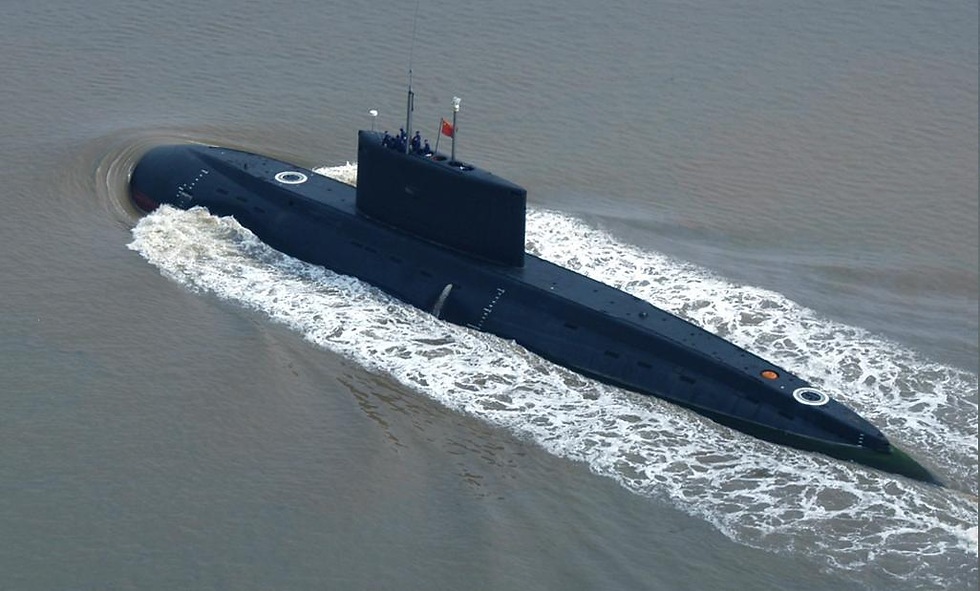
Featured Image: A Chinese kilo-class submarine in service / Wikimedia Commons / Creative Commons Attribution 4.0 International / Free for use
I found your insights on Sun Tzu's strategies fascinating! How do you see the modern A2/AD tactics influencing global geopolitics? It’s like navigating a complex street view where every turn has implications. What are your thoughts?
I keep a tab open with Crazyig for when I need a break during work. They have a decent collection of browser games that run smoothly without any lag. The racing and shooting categories are where I usually end up spending most of my time.
Why do some games become impossible to put down? hot games often look simple when you first start playing, but their real appeal comes from the layers of challenge hiding underneath. Whether you enjoy fast reactions, clever puzzles, strategy, or competitive gameplay, the best games can turn a few simple mechanics into surprisingly complex experiences.
The connection between Sun Tzu’s ideas and modern military strategy was fascinating, especially the focus on deterrence instead of direct confrontation. I also enjoyed how the article explained complex concepts clearly. After reading it, I had fun relaxing with basketball legends game, which was an entertaining change of pace from such a serious topic.
How can we distinguish between FNF A2/AD capabilities being used primarily for deterrence, as the article argues, and the possibility that they are also intended to support offensive operations if deterrence fails?