When Aesthetics Meet the Hammer: Chinese and European Contemporary Art in the Auction Room
Auction houses are often perceived as neutral platforms where buyers and sellers meet, almost like passive observers who merely provide the space for transactions, but in reality, their business practices are far more complex than they appear. Today, auction houses have become the central arenas of cultural exchange in the global art system, reflecting the considerable transformation this market has undergone over the past decade. This is evident, from record sales in London and New York, to the rise of Asian hubs such as Hong Kong and Tokyo. Auctions now serve not merely as sales venues but as a podium reflecting cultural trends, shifting value, and global capital flows. Beyond their commercial function, they operate as mechanisms of visibility, selection, and symbolic validation, closely linking aesthetic judgment with economic value.
Auction houses are not neutral commercial intermediaries, but active agents in the construction of artistic value and legitimacy. The encounter between aesthetics and the auction hammer is therefore not merely a financial event, but a moment in which cultural interpretation and artistic authority converge. In this sense, auctions function as pivotal sites where the trajectories of contemporary artists are shaped, and where artistic legitimacy is simultaneously conferred and contested on a global stage.
The Digitalization Surge
The recent boost in digitalization has dramatically reshaped the art auction market, exceeding the expectations of their traditional confines and enabling participation on an unprecedented global scale. According to the Global Art Market Report 2024–2025, the digital transformation is no longer a transitional phase but a systemic change: online art sales now account for a significant portion of total market activity — approximately 18 % of global sales by value — and nearly half of all new auction clients were acquired through online channels in 2024. This trend highlights how digital interfaces have lowered barriers to entry, allowing collectors from diverse geographic locations to engage in bidding processes once constrained to physical salerooms.
Platforms that facilitate online auctions have essentially become a gateway: surveys suggest that 82 % of collectors under 37 have purchased art online, illustrating a generational shift in collecting behavior that further drives digital market growth. At the same time, the expansion of online transactions is reflected in broader market data, with the Art Basel & UBS Art Market Report showing that online sales grew by 7 % and now rival other mainstream e‑commerce sectors in their share of total revenue. The rise of digital platforms has boosted transnational exposure for smaller auction houses and regional markets. By connecting local auctions with global audiences, artworks once confined to domestic circulation can now attract bids from distant cities. Market research shows the global online fine art auctions segment growing steadily, with online-only sales already making up a majority share of revenues and strong expansion in the Asia‑Pacific region projected over the coming years. The digital expansion has widened participation and diversified the demographic makeup of buyers, enabling a broader spectrum of collectors with varying budgets to engage in auctions previously dominated by elite buyers. Additionally, software and auction technologies tailored to real‑time, borderless requests are estimated to grow at double‑figure rates, further lowering entry barriers and enhancing global connectivity across markets. In this way, the digitalization of auction systems reinforces a broader shift in the art market: from exclusive, geographically bounded events to dynamic, globally accessible platforms where cultural exchange and economic value meld through existing interaction.
China’s Rise in the Global Art Market
Analysing a specific country that has rapidly transformed the global art market helps illustrate how auction dynamics operate on both cultural and economic levels. China, in particular, has assumed a central role, evolving from a peripheral participant to one of the most influential art markets worldwide: auction houses such as China Guardian and Poly Auction have become central nodes of market authority, elevating domestic artists onto the international stage and shaping how Chinese contemporary art is perceived abroad. Academic analyses, including Anita Archer’s Chinese Contemporary Art in the Global Auction Market show that these institutions perform a function far beyond simple sales: they actively construct market narratives, frame artistic identities, and determine which Chinese artists gain cultural legitimacy worldwide. This expansion has been driven by growing wealth among private collectors, diversified artistic production, and sustained interest in contemporary practices that reflect both local sensibilities and global trends. Chinese artists are now regularly featured in major European and American auctions, challenging established hierarchies and introducing fresh modes of artistic expression into dialogues once dominated by Western paradigms.
The presentation of Chinese contemporary art, often through lenses of cultural heritage, national identity, or political nuance, reveals how interpretation can vary sharply across regions. In European markets, for instance, narratives emphasising symbolism and identity frequently influence both prices and critical reception, underscoring the ways in which cultural frameworks shape economic outcomes. This interplay between market expansion and cultural interpretation highlights a central tension in the global art world: artworks are valued for more than aesthetics or price. They also derive value from the stories, meanings, and cultural contexts associated with them. Collectors, critics, and auction houses constantly influence these perceptions.
Europe’s Perspective
Europe remains a central reference point for the global art ecosystem, anchored by centuries of museums, galleries, and auction institutions that have traditionally set standards of taste and value. Auction houses in cities such as London, Paris, and Zürich are still seen as arbiters of prestige, and their catalogues often serve as cultural texts that position artworks within broader historical and artistic ancestry.
However, this role is evolving. European auction houses now operate in an intensely competitive global market, where influences flow in multiple directions. A clear example of this shift can be observed in the pricing and curatorial strategies adopted by Christie’s London in relation to Chinese contemporary art. Over the past decade, Christie’s has increasingly incorporated Chinese artists into high-profile evening sales, strategically positioning their works alongside established Western names. This not only enhances the perceived prestige of Chinese contemporary art but also signals its integration into a global canon. Pricing strategies often reflect this positioning, with estimates calibrated to appeal to both Western and Asian collectors, thereby expanding the potential buyer base. Such practices illustrate how European auction houses actively construct market value while simultaneously mediating cultural recognition across different collecting communities. Chinese contemporary art, once secondary in Western auctions, has grown more visible, forcing European institutions to engage with shifts in taste, ownership, and narrative framing. In return, European artists and works regularly enter Asian auctions, where they are reinterpreted through different aesthetic logics and collector expectations.
This transnational circulation highlights how auction houses function as interpretive mediators. They do more than sell works; they contextualise them, translating artistic meaning across cultural boundaries. European collectors may prize the cultural specificity of Chinese artists, while Asian buyers may seek out European works for their historical cachet. In both cases, the auction room becomes a site where cultural values intersect and negotiate, and where meaning is continually remade through market performance, curatorial writing, and collector engagement.
The Art of Influence in the Evolving Market
Despite the opportunities offered by digital platforms and expanded global participation, the auction world is also confronting a range of structural challenges. While online channels have democratised access, they have not fully displaced traditional modes of valuation, especially at the high end of the market. According to Art Basel and UBS Art Market Report, expensive web-exclusive lots remain relatively rare, suggesting that trust and prestige continue to favour established physical auction practices even as digital channels grow. At the same time, financial pressures, geopolitical tensions, and regulatory complexities shape the strategies of auction houses: wealthier collectors, sometimes hesitant in the face of economic uncertainty, have been observed to reduce purchases at the very top tier, contributing to variation in auction turnover and shifts in the types of works that achieve prominence. The cooling of speculative segments such as NFT art, further complicates predictions about the future of digital sales channels, emphasising that innovation does not eliminate risk, but reshapes it.
Opportunities remain significant, even as the global art landscape evolves: emerging segments suggest that demand is no longer concentrated solely among elite collectors, and at the same time, expanding geographic markets are redistributing collector influence, creating new hubs of activity and shaping global trends. Online auction platforms are at the forefront of this shift: industry forecasts project that digital sales will continue their strong growth trajectory over the coming decade, with Asia‑Pacific capturing a substantial share of new transactions. Together, these developments indicate that while the market’s centre of gravity may be shifting geographically and digitally, the underlying dynamism of contemporary art remains, opening fresh avenues for engagement, participation, and the creation of cultural and economic value across borders.
The Evolving Role of Auction Houses in a Globalised World
Today’s auction houses are no longer passive intermediaries: their decisions about which artworks to highlight, how to describe them, and which audiences to court have profound implications for artistic careers, regional art histories, and international perceptions of value. One prominent trend is the integration of digital tools not just for transactions but for narrative building: detailed online catalogues, social media engagement, virtual previews, and data‑driven insights into collector behaviour are now core elements of auction strategy. At the same time, cross‑cultural engagement, facilitated by global bidding platforms and demographic change among collectors, forces auction houses to carefully balance local specificity with global resonance. They must present artworks in ways that speak meaningfully to diverse audiences, while preserving the institutional prestige that underpins their authority. Emerging collector cohorts are reshaping demand as well.
Millennial and younger buyers increasingly factor in digital accessibility, social identity, and personal meaning when acquiring art, blending traditional definitions of value with new cultural priorities. These shifts underscore a broader transformation: auctions are no longer merely about sales, they are about sustained engagement, community influence, and cultural relevance. In this evolving landscape, auction houses that successfully navigate digital innovation, cultural mediation, and global networks are poised to exercise influence far beyond the marketplace, shaping artistic reputations and global narratives alike. Those that fail to adapt risk declining relevance in a world where cultural authority is as mobile and contested as capital itself.
Conclusion
In the interplay between Chinese and European contemporary art, auctions have evolved far beyond the simple exchange of money for objects. They are dynamic arenas where negotiation, interpretation, and cultural storytelling unfold simultaneously, revealing the intricate ways in which artistic value is constructed and contested. Each hammer fall marks more than a sale; it is a public affirmation of taste, prestige, and cultural legitimacy, a moment where aesthetic judgment and economic power collide on an international stage.
As Chinese contemporary art gains prominence in global salerooms, European institutions find themselves both guardians of tradition and participants in a rapidly shifting landscape. The circulation of artworks across continents transforms the auction room into a meeting point of perspectives, where local histories and global trends intersect, and where the meaning of an artwork is continually reframed by collectors, curators, and critics alike. Digital platforms have further expanded this dialogue, connecting buyers and audiences worldwide, and allowing art once confined to specific markets to resonate far beyond its origins.
Ultimately, auctions today are more than commercial transactions—they are performative stages where culture, commerce, and human networks converge. They illustrate how art is made visible, valued, and remembered, and how its significance is inseparable from the people, stories, and systems that surround it. In this sense, the hammer does not simply close a deal; it signals the ongoing negotiation of meaning and influence that defines the contemporary art world, reminding us that the market is not only about price, but also about the ways we see, interpret, and connect with art across the globe.
The views expressed in this article belong to the author(s) alone and do not necessarily reflect those of European Guanxi.
ABOUT THE AUTHOR
Maria Grazia Russo focuses on China-Europe relations and has gained academic and professional experience across both regions. She completed a period of study at Hebei Normal University’s School of International Cultural Exchange (国际文化交流学院), followed by work in Shanghai within a consulting firm, exploring issues at the intersection of China’s economy and international affairs. Chinese language skills and a strong engagement with contemporary China are key elements of this background.
This article was edited by Ziyu Zhang.
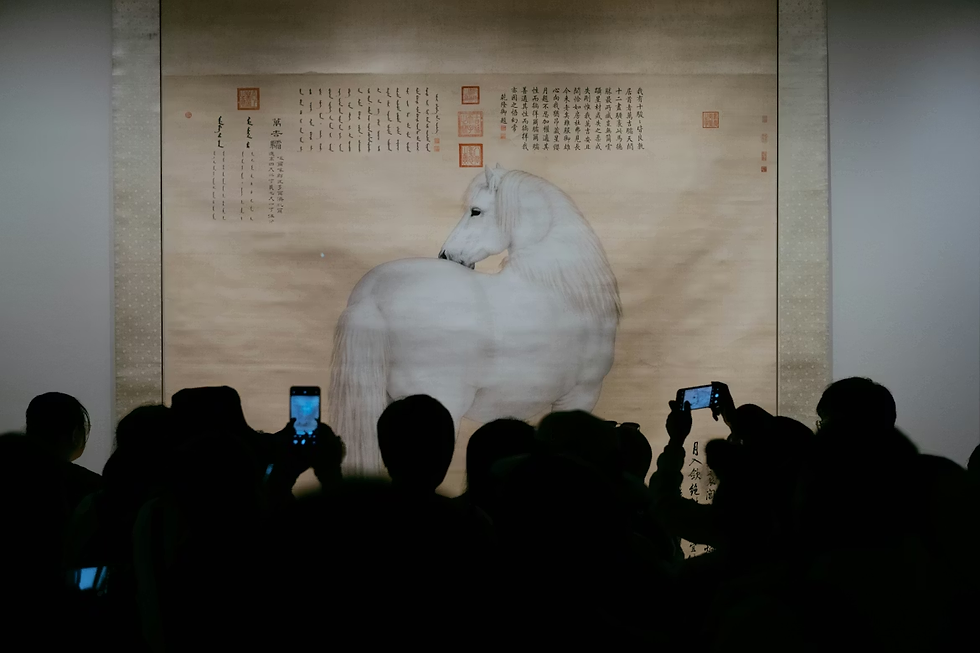
Featured Image: A Chinese painting of a white horse in a museum / Tommao Wang / Creative Commons CC0 License / Unsplash / Free for use


I've been looking for a simple Block Breaker game that works directly in the browser, and this one is actually smooth and addictive. No download needed, just play instantly.
sits between psychological horror and yandere visual novel. The romance tag comes with a warning label. It is not about picking the kindest reply or filling an affection Home Is Where He Is meter. The tension comes from reading a scene twice: once for what the characters say, and once for what the house is trying
Set a Time Boundary
SURVIVE MIN is designed to be completed in one sitting (~1 hour). Choose a night when you have that hour. Avoid starting at 1am when fatigue lowers your emotional defenses. Being tired while playing a game about psychological pressure can blur the line between fiction and feeling.
Like
New to the game? This guide covers how to play the Meccha Chameleon Online Game from your first spawn to your first perfect camouflage — roles, modes, painting, and the controls you'll use every match.
What an insightful article! The disparity between Chinese and European contemporary art at auctions exemplifies how cultural narratives influence art world valuations. Working in galleries has given me firsthand experience block blast with how background and market demands influence aesthetics.